|
Extravagance, waste… hunger
Elson Concepción
Pérez
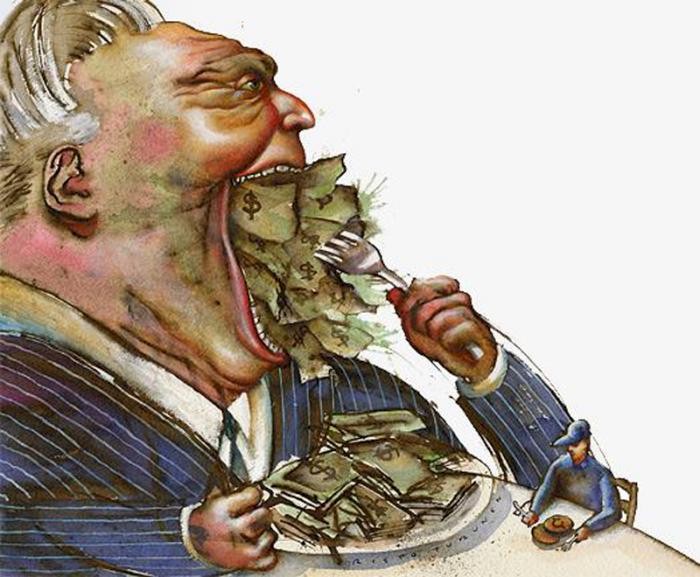
Although U.S. activist Rob Greenfield was able to
sustain himself with food he scavenged from bins
while cycling around the country - the FAO estimates
that each year more than 1.3 million tons of food is
thrown away - the issue of world hunger is not a
priority on the agenda of rich countries.
I
decided to write about this issue because I am
increasingly convinced that the common denominators
in the current global crisis are hunger; the rapid
effect of climate change, overlooked in government
policies; and the disproportionate ambitions of the
arms market.
Only the poor complain of hunger, while more money
is given to save a capitalist bank in crisis, than
to help an African community obliged to fight both
malnutrition and illness.
All these factors are “treatable,” if instead of
investing in arms and wars, funds were spent on food
and medicine for those most in need.
According to the UN, the tragedy and suffering of
millions of victims of hunger (almost half the
world’s population) could be resolved with “less
than 1%” of the capital used by the principal
capitalist governments to save the global financial
system (including banks and companies which have
intensified the crisis).
Poverty and hunger aren’t good business, they are
outside the circles of consumption and don’t
generate profits. In the development of this human
tragedy process (with wealth concentrated in the
hands of few and the extermination of “surplus
populations”) the bases and triggers of a “social
apocalypse” are fomented, which the system and its
analysts still neither register nor acknowledge,
according to an analysis by IAR NOTICIAS.
What kind of world are we living in? We need only
look at the following number to understand: the 300
richest people in the world have more wealth than
the three billion poorest, almost half the world’s
population, according to a report by Al Jazzira.
There is more. For example, in the United States,
authorities estimate that approximately 40% of food
produced in the nation is thrown away, above all by
supermarkets.
The Fourth International Forum on Ways to Protect
Nature was held in Naples, Italy from October 10-11.
An article by IPS covering the event reported
that “just one fourth of all the food that is wasted
or thrown away in the world could feed 870 million
people suffering from hunger.”
The experts stated that although global food
production has tripled since 1946 and malnutrition
has fallen from 18.7% to 11.3% over the last 20
years, food security remains a crucial and pending
issue.
The cost of wasted and thrown away food has risen to
approximately 680 billion dollars in industrialized
countries, according to the Save food campaign, a
project by German Trade Fair Messe Dusseldorf, the
FAO and the UN Environmental Program.
Developed countries throw away almost 222 million
tons of food, almost the total net food production
of Sub Saharan Africa (230 million tons), the
organization reported.
British supermarket chain Tesco reported that it
threw away 28,500 tones of food in the first half of
2013, and that annual surplus food in Great Britain
is estimated to be 15 million tones.
While this shameful reality is exposed as being part
of the exhibition displaying the extravagance and
waste of rich nations, a report by the UN stated
that every 15 seconds a child dies of hunger in the
world.
According to the UN, more than 1 billion people are
suffering from chronic hunger, the highest figure in
history, with more than 3 billion poor and
undernourished people in the world, representing
half the world’s.
According to the report published in the magazine
The Lancet, on average, three million children
die of hunger every year.
This conclusively demonstrates that in the midst of
the extravagance and waste of the powerful, the
majority of the world’s population lack the basic
resources to guarantee them food, health and life.
|


