|
ONELIO JORGE CARDOSO CENTENARY
CELEBRATED
A
stalker of stories
Mireya Castañeda
A moment as significant as a centenary invites
reflection on the life and work of a writer or
artist, and this is precisely what is on hand this
year, in the case of Cuban author Onelio Jorge
Cardoso (1914-1986), magnificently defined as a “a
stalker of stories.”
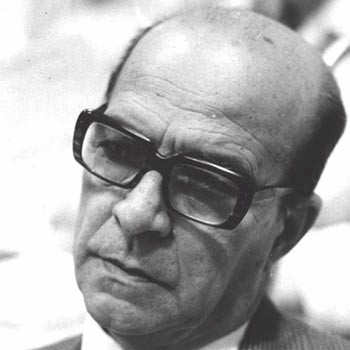 Onelio
Jorge Cardoso, Cuba’s storyteller. Onelio
Jorge Cardoso, Cuba’s storyteller.
His renowned mastery of storytelling, unique voice,
handling of dialogue, elegant humor and clarity have
earned him a place among the greatest of this genre
in Latin America, along with the likes of Borges,
Quiroga, Cortázar, Rulfo and Guimarães Rosa.
Onelio Jorge Cardoso, was born in Calabazar de Sagua,
a small town in central Cuba. He studied Science and
Letters at the Santa Clara Institute, but was unable
to go on to university as a result of economic
difficulties.
He worked in several trades, and as a traveling
salesman, which allowed him to become familiar with
other places and, above all, countless individuals
who later served as models for characters in his
stories.
He began to write at an early age and in 1945 won
the prestigious Alfonso Hernández Catá contest with
Los carboneros. The jury which awarded this
national prize was composed of important
intellectuals, including Fernando Ortiz, Juan
Marinello and Rafael Suárez Solís. In 1971, in the
magazine
Cuba,
Marinello gave his impression of Onelio’s work,
“Within that year’s expansive narrative jungle, I
discovered an uncommon innovator with a distinct,
surprising tone. It was a short, penetrating story
which announced a great writer.” He continued, “The
promise was fulfilled. Onelio Jorge Cardoso is today
a powerful storyteller of real American stature,
whose presence is saluted with admiration.”
His 45th year was a productive one for Onelio Jorge
Cardoso, with the publication in Mexico, prepared by
another Cuban intellectual, José Antonio Portuondo,
of his first book, Taita, diga usted cómo,
which included four stories entitled “El homicida,”
“Una visión” and “Nino.” Portuondo
wrote in the brief prologue, “Onelio Jorge Cardoso’s
stories, always referring to the rural environment,
are characterized by their sobriety, with an
admirable economy of elements.”
His second book did not appear until 1958, the now
fabled El cuentero, published by the Las
Villas Central University. This fundamental work was
circulated in the magazine Humanidades, based
in Mérida, Venezuela, along with comments by critic
M. R. Alonso, who wrote, “Arriving to us is this
ship, printed in Havana, loaded with stories, some
excellent, some stupendous, written by Onelio
Jorge.”
His third book, El caballo de coral, was
published in 1960, and when the Chilean Nobel Prize
winner Pablo Neruda arrived to Cuba in 1961, he was
introduced to Onelio Jorge’s stories. He commented
to the Cuban poet
Fayad Jamís, “One of my latest literary surprises
has been the book of stories by Onelio Jorge Cardoso
(...) he is one of the best storytellers in the
Americas. His narratives are fast, sharp and very
beautiful.”
In 1962, the first edition of Cardosa’s complete
works was published with illustrations by René
Portocarrero, and that same year, Gente de pueblo,
a collection of news stories with photos by José
Tabío, and a prologue by another great from the era,
Samuel Feijóo, whose centenary is also being
celebrated.
His work began to be published more often. In 1964 a
new book of stories came out, La otra muerte del
gato, and the following year, a small volume
with the story El perro; in 1966, Abrir y
cerrar los ojos; in 1974, El hilo y la cuerda;
in 1981, the collection of news stories Gente de
un nuevo pueblo; and 1982, Caballito blanco,
a compilation of stories for children..
From 1976 until his death, he was president of the
Union of Cuban Writers and Artists literature
section.
In 1983 he was awarded an Honorary Doctorate by
Simón Bolívar University in Bogotá, Colombia, and in
1984, from the University of Havana. His last book
for adults was La cabeza en la almohada
published in 1983, followed in 1984 by a novel for
children, Negrita.
The legendary writer continues to receive attention
from experts in Cuba, Latin America and Europe, who
study the distinctive features of the body of his
work, its essential facets, stylistic and
ideological values, the particularities of the
language and structure of his stories, which have
been translated into
Bulgarian, Russian, German, Czech, Chinese, English
and French, and included in many anthologies.
But what could be better than giving the floor to
the man himself, known in Cuba as the Cuentero Mayor
(the Greatest Storyteller), evoking one of his
emblematic works. A Mexican journalist asked Onelio
Jorge what was most important to him in a story. He
responded, “The most important is to move, that is,
to convince by way of the emotional. And above all,
giving the reader the opportunity to compliment the
story. In a word: to suggest.” Several generations
of Cubans have enjoyed the beautiful creations left
us by Onelio Jorge Cardoso, in his ever-current,
living stories.
|


