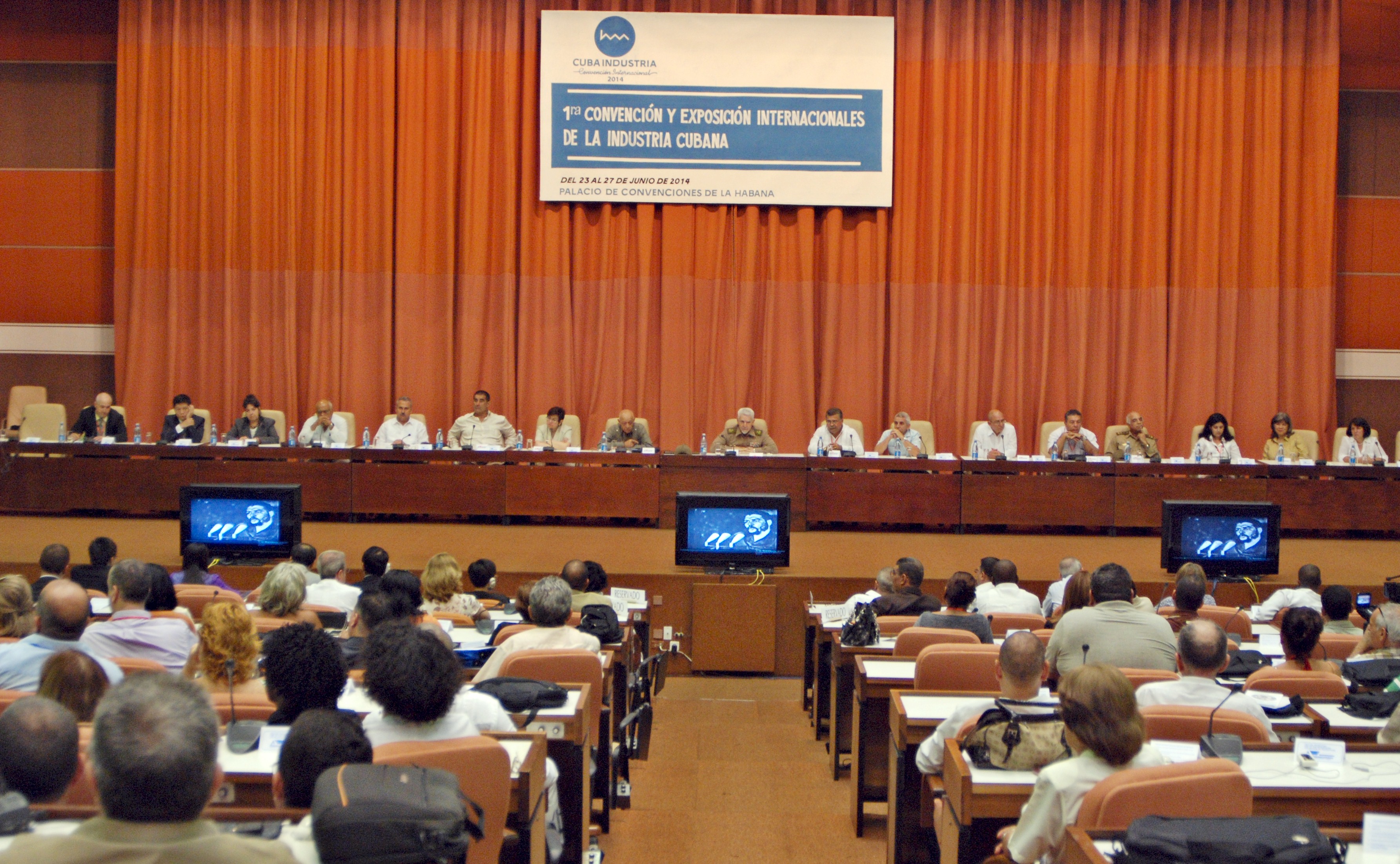
Presented and discussed during the
event were potential collaborative industrial
projects with foreign investors, such as new
technological alliances for the development of the
recycling industry and production of transport
equipment,
Such is the case with the Spanish
company Cecauto, present on the island since 2004,
which is proposing to construct factories for the
assembly of 2,000-3,000 motors, 1,000 gear boxes and
their replacement parts, annually.
Cecauto representative Lorenzo
Herrera commented to Prensa Latina that the idea is
to facilitate the development of Cuba’s automotive
industry. The new Foreign Investment Law and Mariel
Special Development Zone provide opportunities to
produce much demanded automotive goods within the
country, supplying raw materials and necessary
equipment to the area to work towards substituting
imports, a common objective for both Cuba and
Cecauto, he stated.
Herrera commented that that the
project is considered long term, as the prospects
are great, and currently only in the investigation
stage, although very ambitious and mutually
beneficial. In Cuba, Cecauto has machinery to
produce pressure hoses and automobile parts, with
ample opportunities to expand under the new Foreign
Investment Law.
Also in attendance at Cubaindustria
2014 is PDVSA Industrial, a conglomerate of key
economic importance with 16,000 employees, leader in
the Venezuelan oil industry and involved in five
other sectors: heavy and light manufacturing;
infrastructure construction; plus the chemical and
shipbuilding industries.
Described by its director, Juan
Carlos Carballo, as the heart and lungs of the vast
nation, the company is among PDVSA’s non-oil
subsidiaries, which promote the strategic
development of the country. Its objective is to
create an industrial network in areas associated
with PDVSA’s chain of production, establishing
complete economic and technological sovereignty and
respecting the principle of state ownership of the
means of production to meet the people’s social
needs.
Carballo highlighted the
Construpatria company - responsible for supplying
all materials for Venezuela’s Great Housing Mission
- as an outstanding example of a PDVSA non-oil
subsidiary. He also stated that PDVSA Industrial was
attending Cubaindustria 2014 since it is the best
forum to promote the enterprise’s work, sell its
products, and strengthen ties with Cuba.
Carballo continued commenting on the
existence of a joint enterprise, Guardian of ALBA,
as well as a University of Computer Science
technology entity; and Rejuvensa which works with
the Raw Materials Recovery Union to recycle scrap
metal, as well as other joint ventures with China,
Bulgaria, and Venezuela’s private sector.
Pleased by the development of
collaborative relations, Carballo stated that the
possibilities are unlimited, with the incorporation
of other activities such as joint mining ventures
and nickel exporting.