Fidel in the heart
of Romerillo
• The historic leader of the
Revolution on January 8 visited the Art Laboratory,
an innovative socio-cultural project led by Kcho in
Romerillo, a community within the Havana
municipality of Playa’s Cubanacán Popular Council
district
Amelia Duarte de la
Rosa /
Fotos:
ESTUDIOS REVOLUCIÓN
It was no accident that Alexis Leyva
Machado (Kcho) chose to inaugurate his Laboratorio
para el Arte in Romerillo, this past January 8. The
artist wished to commemorate, with residents of the
community, the 55th anniversary of the
Freedom Caravan’s arrival in Havana. In some ways,
he commented to this reporter, creating motivation
and general interest through art, sowing and
developing cultural values amongst the people, was
also the dream of the young rebels led by Fidel in
1959.
On the corner of 7th and
120th, just after 9:00 pm, as artists,
intellectuals and Romerillo residents gathered at
the entrance to the community center for the
unveiling of a plaque commemorating the historic
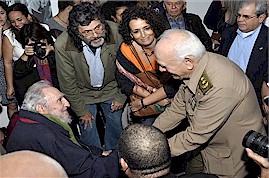
date, the best of surprises appeared among those in
attendance, Comandante en Jefe Fidel Castro.
There was applause, joy, emotion and
cheering. The faces of children, young people,
adults and the elderly lit up as they divined,
through the van’s window panes, the unmistakable
profile of our Comandante, in the very heart of one
of the most humble neighborhoods in Havana.
His first stop, once inside the Kcho
Estudio Romerillo (Laboratorio para el arte), was
the Martha Machado Art Gallery, conceived as an
educational community museum, where, in addition to
the presentation of national and international
expositions, art appreciation workshops for children
and adolescents will be offered.
Fidel entered, with slow but sure
steps, to view the Wilfredo Lam exhibit, Lam, eres
imprescindible (Lam, you are indispensable), a
significant collection of original works by one of
Cuba’s most renowned painters.
It was amidst Lam’s paintings, those
which evoke Cuba’s Chinese, African and Caribbean
origins and unite the human, animal, plant and
divine worlds, when Fidel began to speak of his
concerns, questioning, commenting and noting,
especially, the work of Telesur journalists and the
event held in Venezuela commemorating the 55th
anniversary of the Cuban Revolution’s triumph.
As lucidly as ever, he referred to
his most recent readings; to environmental problems;
epidemics and illnesses which are consuming society;
the search for information on websites and his
preferences; and the importance of people being
informed about what is occurring around them and
throughout the entire world.
Next he toured Kcho’s exposition, El
pensador (The Thinker) displayed in a hall named La
Nave (The Ship), a space dedicated to contemporary
art which also houses the Comandante de la
Revolución Juan Almeida Bosque Library, equipped
with all media and resources needed for studies, as
well as the Romerillo Experimental Graphic Workshop
and the Tocororo theater.
Fidel shared his thoughts in
Romerillo for more than an hour as he toured the
Laboratory’s facilities. He told Kcho, with a trace
of a smile, that he wouldn’t offer his impressions
since he might make a blunder, but that, really, the
project appeared to him to be very good.
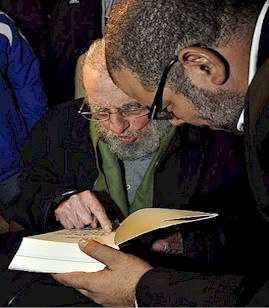
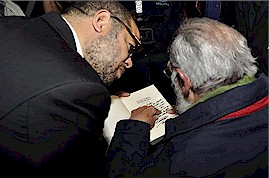
Before leaving, he presented Kcho
with his book, La victoria estratégica, and signed
it with a beautiful message, "For Kcho, a genius of
culture and education, with my sincere recognition
for the dignity with which you have dedicated your
life to the happiness of others."
As he departed, Fidel greeted the
people gathered in the street and left those present
with the joy and satisfaction of having witnessed an
historic moment, of having seen him, greeted him and,
once again, thanked him.
The history of Romerillo has changed.
In addition to the transformation and restoration of
its public space with the opening of a new cultural,
educational center dedicated to human improvement,
residents may now add, with pride, the Comandante’s
visit – a visit which they will surely never forget
and which legitimizes the noble purpose of the
Laboratorio. Kcho described this purpose for Granma
some months ago saying, "Culture and community can
walk hand in hand. It is not enough to exhibit art,
there are many ways it can be interwoven, so that it
can become a positive influence, in a real way, on
life in society (... ) but this is no magic trick,
it requires work, will and perseverance."