


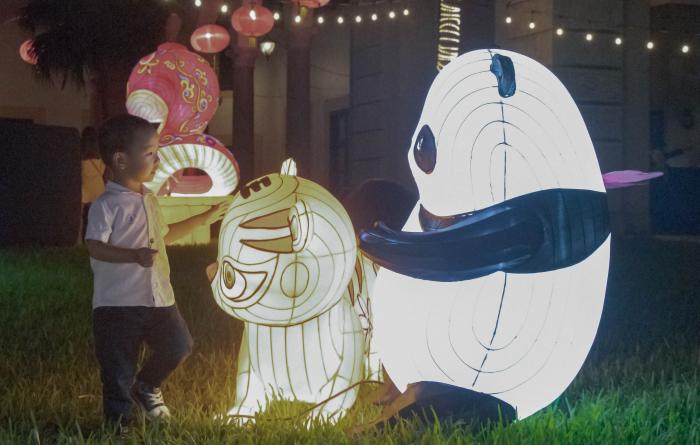
A boy is looking at two lanterns; one of them, in the shape of a panda bear, catches his attention. Curious, he approaches it and walks around it, exploring every detail.
In the happiness of his childhood, he wonders what is this light that seems to be almost in his hands. Perhaps he is surprised by the glowing animals.
Joy shines in his eyes as he walks around, touches the lanterns and imagines the stories they could tell or the secrets they hold.
Does he think he is in a dream?
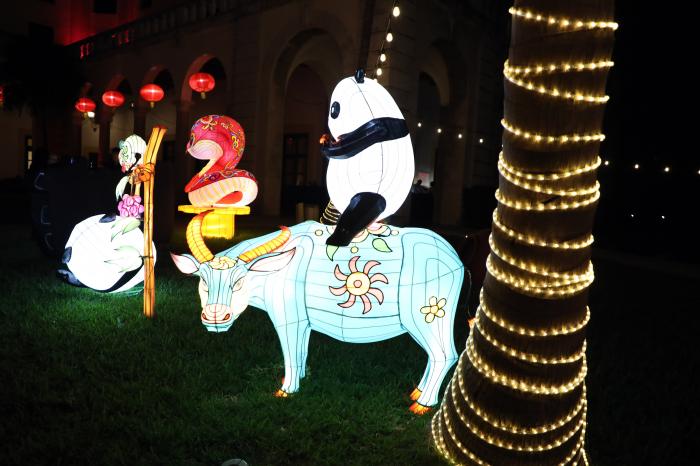
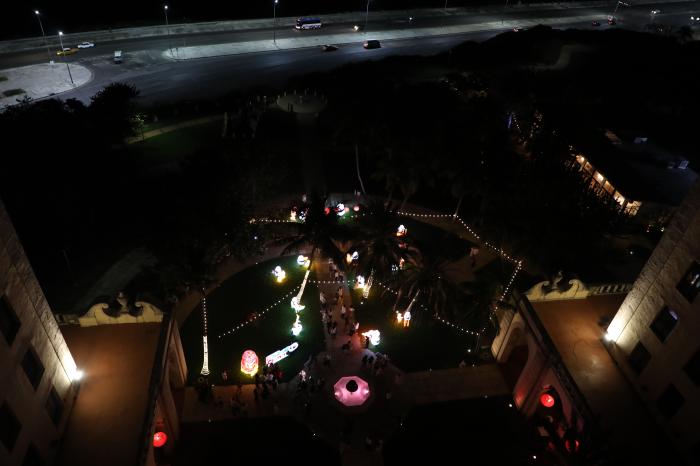
His mind draws fantasies, unaware that he is traversing links between cultures. His steps take him on a journey through the garden, where representations of the 12 animals of the Chinese zodiac have been collected, accompanied by pandas.
He continues on his own adventure, while all around him, other visitors are marveling at the exhibition, walking among them and enjoying the cool evening.
It is the opening of the first Chinese lantern exhibition during the Lantern Festival. The classic National Hotel is hosting the exhibition, the fruit of collaboration between the Chinese Embassy in Cuba and the Havana Biennial.
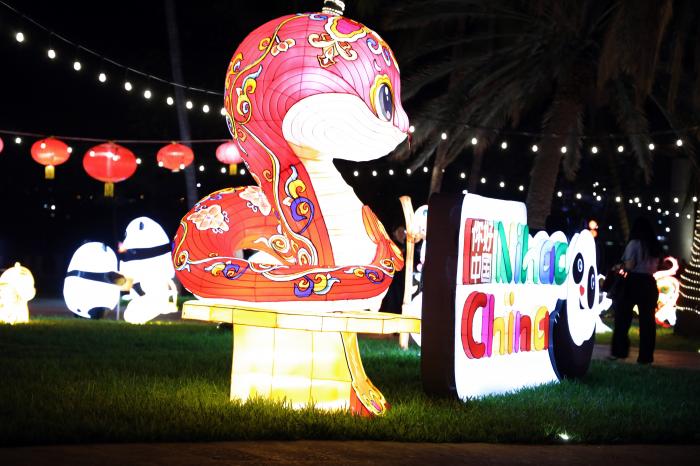
A poster welcomes. «Nihao China» the illuminated letters reads, as cheerful as the "hello" that this greeting means.
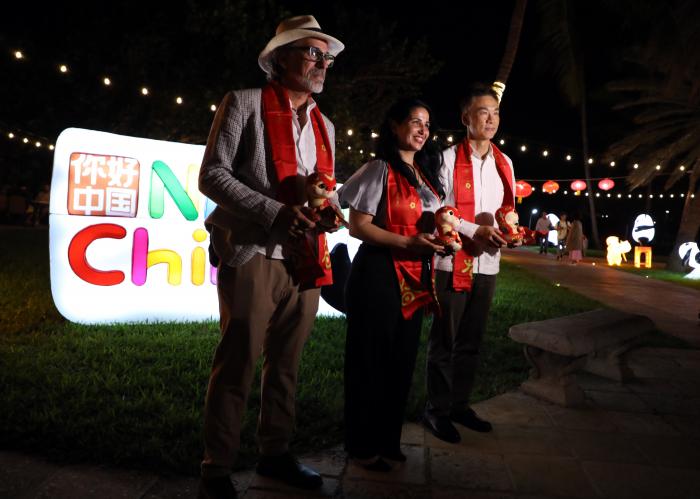
Hua Xin, the Asian nation’s ambassador to Cuba, Daneysi García Roque, acting president of the National Council for the Visual Arts, and Nelson Ramírez de Arellano, director of the Wifredo Lam Center for Contemporary Art and the 15th Havana Biennial, are in front of the poster.
Minutes earlier, at the opening ceremony, the three had welcomed the exhibition and emphasized its importance.
«We are integrating the Chinese New Year into the Havana Biennial, an important Cuban cultural event, and we are combining tradition and modernity," the ambassador pointed out.
Daneysi García spoke about to the strengthening of cultural relations between Cuba and China. She cited exchange between students and artists, representatives of their respective nationalities.
She described the significance of the Lantern Festival for family reunion and hope, as well as the symbolism of the lights that guide each person.
"This is the relationship between Cuba and China: an example of cooperation between two countries with distant geography, but with common development goals.
May this ceremony symbolize the alliance that continues to evolve, adapting to global challenges and strengthening the bonds of friendship between the two peoples."
Nelson Ramírez de Arellano emphasized the pleasure of "having an exhibition of traditional Chinese lanterns, recently declared Intangible Heritage of Humanity by Unesco, as an inseparable part of the visual code of the Spring Festival". He considered the event as an opportunity for dialogue between cultures and highlighted the pen path for future interpretations of this tradition by artists.
The three of them now hold small stuffed snakes, symbols of the new year that began on January 29. It is a symbolic evening with the wisdom, the desire for abundance and the capacity for reinvention associated with the snake.
The lanterns amaze the guests: artists, diplomatic corps, press media and visitors. The National Hotel has been transformed by adding mythology and symbolism to its historical context, enriched by this metaphor of the transformation that the Year of the Snake invites us to undergo.
Meanwhile, the child in all of us continues to walk, wanting to touch the light, and to laugh at the tiger, the dog, or the dragon that have found their place in this garden and in every dream of innocence.


COMENTAR
Responder comentario